
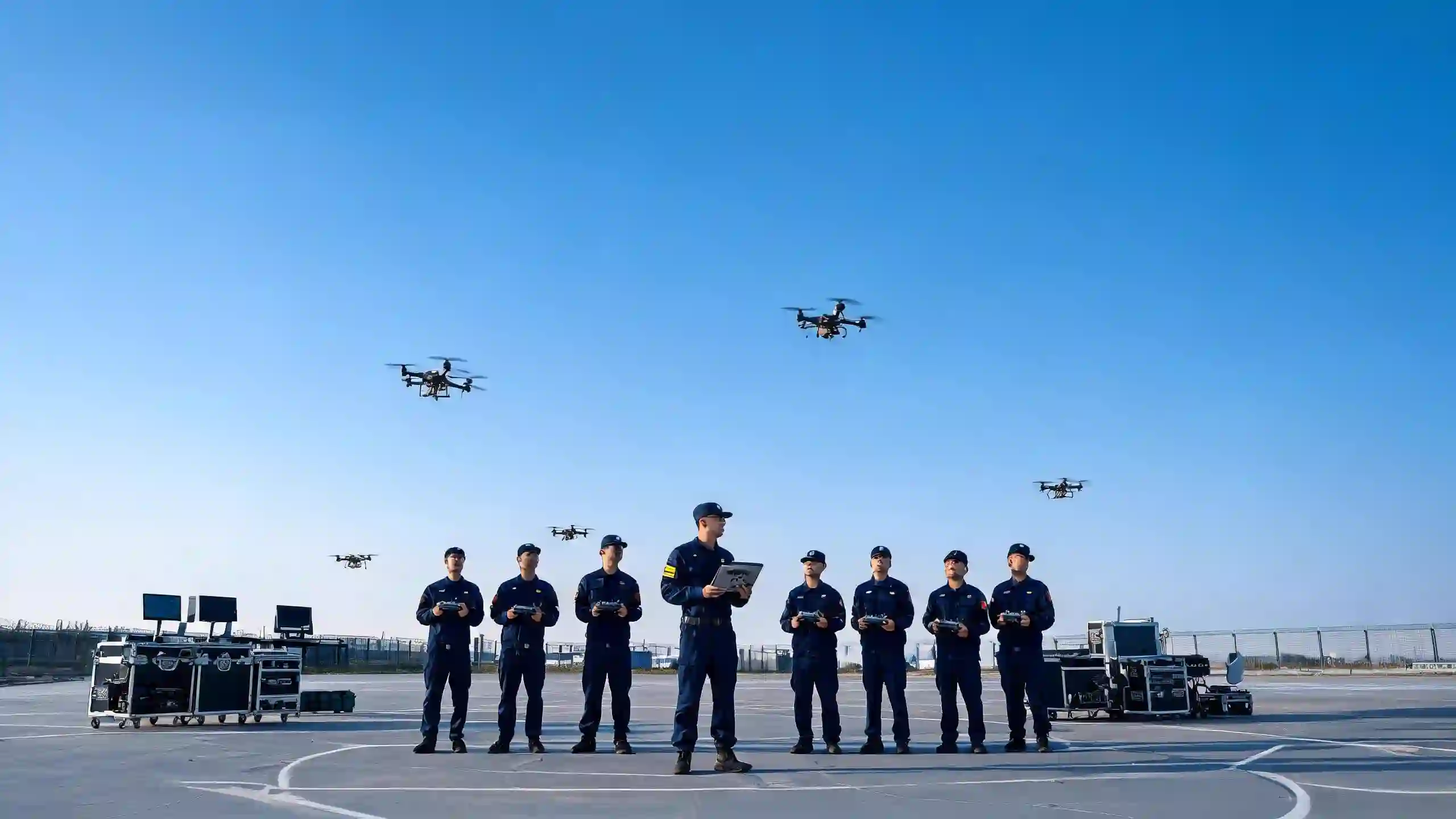
In June, the first CAAC UAV pilot license training program hosted by NingHang Home concluded successfully in Ningbo. The two-week program covered five modules — aviation law, meteorology, flight principles, simulation, and live flight training — achieving a 100% pass rate, with every trainee obtaining a CAAC-issued UAV pilot license.
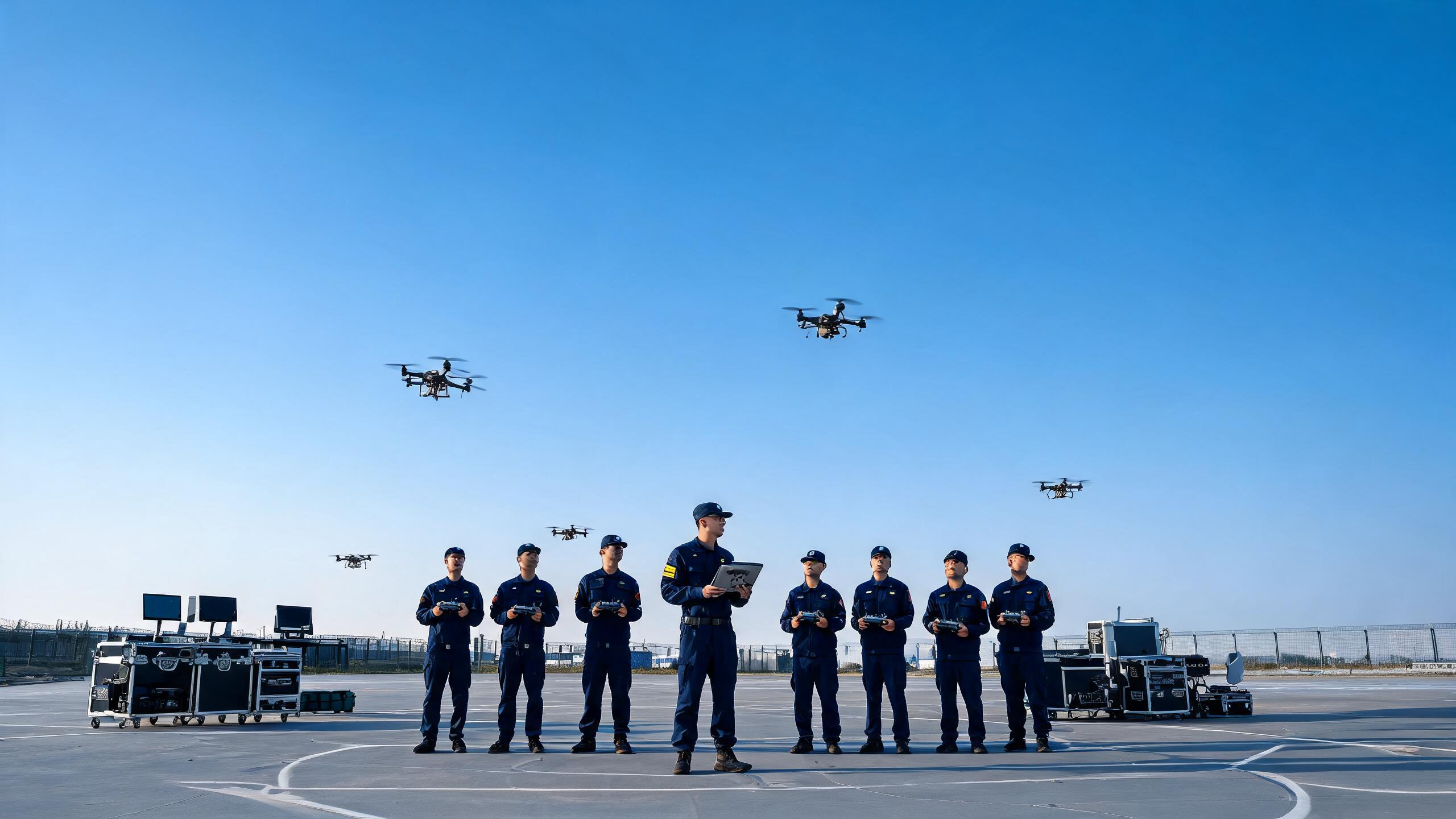
Scientific Curriculum, Rigorous Assessment
As an official CAAC-recognized training institution, NingHang Home built a complete curriculum aligned with the CAAC Regulations on Civil UAV Pilots:
- Theory (40 hours): aviation law, airspace rules, meteorology and aerodynamics, UAV systems, and emergency procedures;
- Simulation (20 hours): takeoff/landing, route flying, hovering, and emergency handling on professional simulators, with 100+ simulated sorties per trainee;
- Live flight (40 hours): real-aircraft practice at the Ningbo Cicheng UAV Sports Park, covering both VLOS and BVLOS operations.
Graduation exams comprised a written theory test and a practical flight; this cohort averaged 92 on theory with a 100% first-attempt practical pass rate.

"Graduate and start working; get certified and start earning." That is NingHang Home's promise to every trainee.
A Closed Loop from Training to Employment
NingHang Home goes beyond certification, connecting trainees to a full "train — certify — employ — incubate" pathway across the Group's entities:
- Graduates are prioritized for roles at NingBo NingHang UAV Tech, NingHang Jiye Special Vehicles, and NingHang Service Emergency Rescue, handling inspection, surveying, security, and emergency duties;
- Outstanding trainees join real government and enterprise projects, accumulating flight hours and field experience;
- Overseas tracks offer placement in Pakistan and Ghana, enabling "train in China, practice abroad."
According to NingHang Home's director, the second half of 2026 will add advanced tracks — instructor, agricultural spraying, and power-line inspection — targeting an annual capacity of 2,000 trainees and a low-altitude talent network across East China and beyond.
The next cohort opens in August, with 60 places available to the public and partner institutions.

